
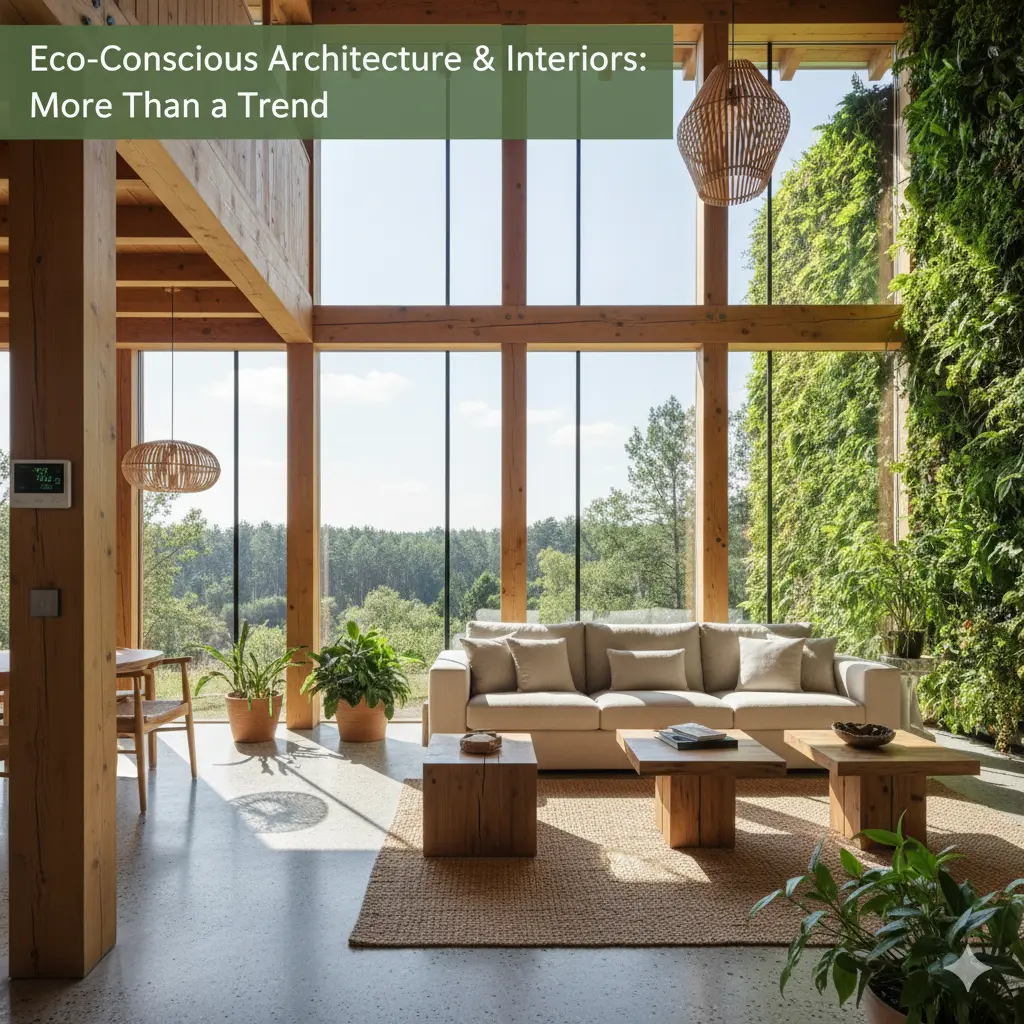
Sustainability in architecture and interiors has evolved far beyond a passing trend—it’s now a philosophy that defines the very essence of modern design. Today’s homeowners are increasingly aware of their environmental footprint, seeking spaces that are not only visually compelling but also kind to the planet. As designers, our responsibility lies in creating buildings and interiors that balance luxury with longevity, aesthetics with accountability.
Sustainable design begins with an understanding of energy, materials, and time. Energy-efficient architecture incorporates passive cooling, natural light, and cross-ventilation to reduce dependency on artificial systems. The choice of materials is equally critical—locally sourced stone, reclaimed wood, bamboo, and low-VOC finishes create healthier indoor environments while minimizing transport emissions. In tropical climates like Kerala, where natural ventilation and shading are key, vernacular techniques such as deep overhangs, clay tiles, and open courtyards blend environmental performance with regional character.
But sustainability isn’t about sacrificing beauty for function. In fact, when executed well, eco-conscious interiors often feel richer and more authentic. Natural plasters, handcrafted finishes, and earthy palettes create warmth and tactility that mass-produced materials can’t replicate. Recycled and upcycled furniture pieces bring stories into spaces, while handmade textiles add depth and soul. The visual language of sustainability is deeply human—it celebrates imperfection, craftsmanship, and connection to place.
There’s also a compelling business case for going green. Sustainable architecture leads to long-term savings through energy efficiency and increased property value, while aligning with the growing global emphasis on environmental responsibility. For design firms, it offers differentiation—a statement that design can be both beautiful and ethical. As the world faces the realities of climate change, the architects and interior designers who embrace sustainability are shaping not just homes, but a better future.