The way we inhabit our homes has changed dramatically over the past few years. Work, rest, fitness, and leisure now coexist under one roof, giving rise to the era of hybrid and multi-functional living. In today’s fast-changing world, flexibility has become the most valuable design feature of all. Spaces that can adapt, transform, and evolve with their users are no longer luxuries—they are necessities.
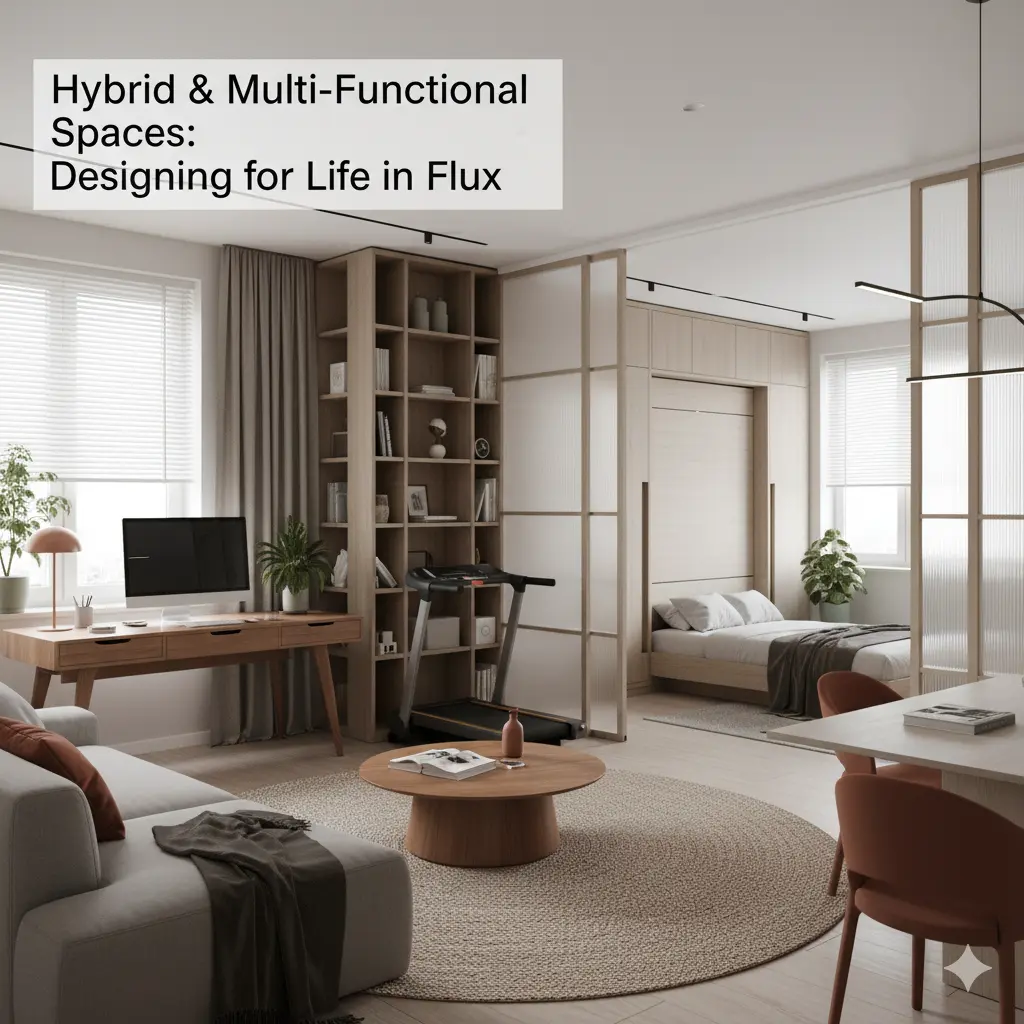
Modern hybrid spaces are designed to do more with less. An open-plan living room may double as a workspace during the day and transform into a cozy entertainment zone by night. Bedrooms might feature hidden desks that unfold when needed, and compact apartments may rely on sliding partitions or modular furniture to change function instantly. The goal is to create fluidity—rooms that feel open yet organized, multifunctional yet aesthetically unified.
Designers achieve this adaptability through thoughtful zoning and smart detailing. Instead of building permanent walls, subtle cues like area rugs, lighting variations, or ceiling treatments can visually define different zones within a single space. Hidden storage solutions, foldable furniture, and acoustically treated materials allow spaces to shift purpose without clutter or compromise. Light plays a crucial role too—natural light enhances openness, while layered artificial lighting ensures comfort across multiple activities.
Beyond practical needs, hybrid design represents a new lifestyle mindset—one that values flexibility, simplicity, and emotional well-being. In cities where space is limited, the ability to transform a small apartment into a home office, guest room, or gym makes design feel personal and empowering. When done well, hybrid design is not just functional—it’s poetic. It reflects the modern rhythm of life, where adaptability is beauty in motion.